


Technical Analysis of 4G Two‑Way Radios Real‑Time Communication Tool with High‑Speed Network and High‑Definition Voice
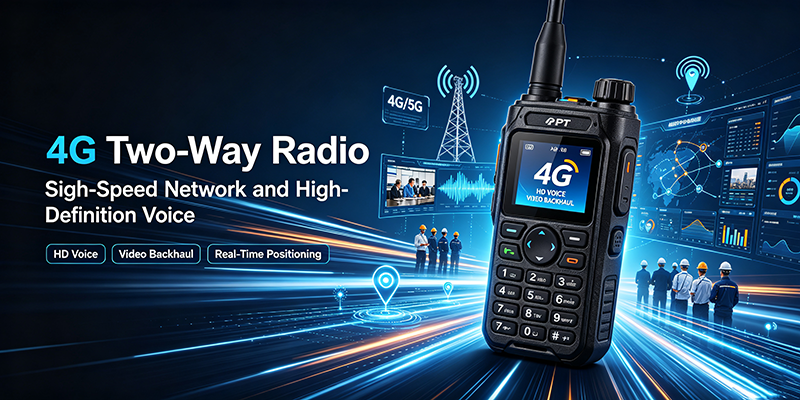
The popularization of 4G networks has brought qualitative leaps to mobile communications. Leveraging highspeed 4G networks, 4G twoway radios deliver highdefinition voice, realtime video backhaul and multimedia communication, and are becoming powerful tools for team realtime communication. This article analyzes the technical features and application advantages of 4G twoway radios.
1. HighDefinition Voice: Clearer and More Natural Calls
Constrained by narrowband transmission, traditional twoway radios produce poorquality voice audio. Powered by 4G broadband networks, 4G twoway radios transmit highdefinition wideband voice, achieving call quality close to facetoface conversations. Higher sampling rates capture richer voice details, making speech intelligible even in noisy environments. Many 4G twoway radios adopt intelligent noisereduction algorithms to filter background interference for clearer, more natural audio. For teams with frequent communication demands, highdefinition voice greatly boosts collaboration efficiency and reduces repeated confirmation caused by inaudible speech.
2. Video Backhaul: VisualEnabled Communication
The uplink bandwidth of 4G networks supports realtime video transmission. 4G twoway radios stream live onsite footage back to command centers. Remote operators can not only hear frontline audio but also view actual field conditions to make accurate judgments and decisions. Video backhaul delivers irreplaceable value for emergency response, remote technical guidance and onsite inspections. Some 4G twoway radios support twoway video calling, enabling facetoface interaction between headquarters and field staff as if they were onsite together.
3. RealTime Positioning: More Accurate Dispatching
Most 4G twoway radios integrate dualmode GPS / BeiDou positioning and report location data in realtime over 4G networks. Command centers visualize realtime staff positions and movement trajectories on electronic maps, and intelligently dispatch the nearest available personnel according to distance and location. The electronicfencing function defines permitted activity zones and triggers automatic alerts when personnel cross boundaries. Trackplayback supports postincident review and performance assessment. These positioningdriven dispatching features improve teammanagement precision and optimize resource allocation.
4. Multimedia Communication: Richer Information Delivery
Beyond voice and video, 4G twoway radios support abundant multimedia communication functions. Text messages convey information when voice calls are impractical; picture transmission shares onsite photos and documents; location sharing keeps team members aware of oneanother’s whereabouts. Selected models support group broadcast for administrators to push critical notifications to all users. Such multimedia capabilities diversify information delivery beyond simple voice. Matching dispatching platforms centrally manage voice, video, text and location data to build integrated commandanddispatch architectures.
Summary
Featuring highdefinition voice, video backhaul, realtime positioning and multimedia communication, 4G twoway radios redefine standards for team realtime communication. More than simple calling devices, they are multimedia communication terminals combining voice, video and data services. With continuous 4G network improvement and falling service charges, 4G twoway radios will play greater roles across scenarios and become indispensable communication tools for efficient team collaboration.


