


In‑Depth Analysis of DMR Digital‑Analog Dual‑Mode Two‑Way Radios Professional Communication Solution with Digital‑Analog Compatibility
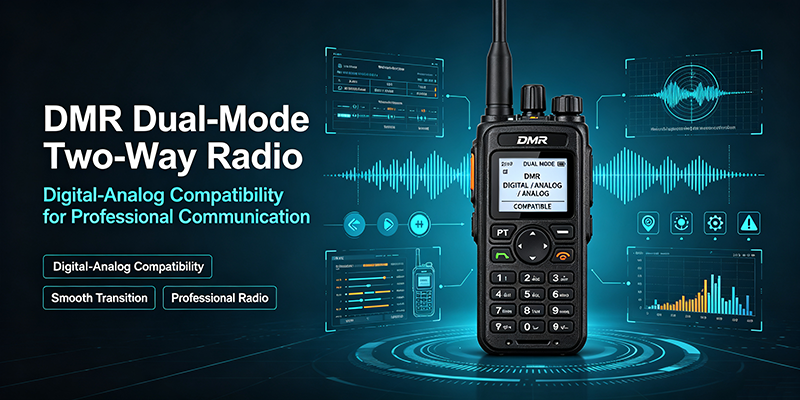
During the transition from analog to digital communication, many teams face challenges caused by mixed oldandnew equipment. DMR digitalanalog dualmode twoway radios support both digital and analog communication standards. They interoperate with modern digital systems while remaining compatible with legacy analog hardware, making them ideal choices for communicationsystemupgrade transition periods. This article conducts an indepth analysis on technical features and application value of DMR digitalanalog dualmode twoway radios.
1. DigitalAnalog Compatibility: StressFree Smooth Transition
The core advantage of DMR digitalanalog dualmode twoway radios lies in simultaneous support for DMR digital and conventional analog modes. Operators toggle between modes as required: digital mode for conversations with digital devices, analog mode for legacy analogradio communication. This proves extremely practical for teams undergoing gradual system modernization. Fullequipment replacement is unnecessary; digital upgrades can be completed in batches. Newlypurchased DMR dualmode radios can run in analog mode first and switch to digital after fullteam upgrade, protecting existing capital investment.
2. DigitalMode Advantages: Clarity, Efficiency and Intelligence
Under digital mode, DMR dualmode radios deliver strengths unmatched by analog equipment. Digital voice adopts errorcorrection encoding and remains intelligible even near signalcoverage edges, free of analogsignal noise and distortion. DMR adopts twoslot technology, enabling two independent calls over one single frequency and doubling spectrumutilization efficiency. Digital mode also supports text messaging, GPS positioning, remote monitoring, emergency alarms and other smart features for more intelligent and efficient communication. Call recording and encryption further expand practical application scenarios.
3. Analog Compatibility: Protect Legacy Investment
Although digital communication brings prominent benefits, many organizations have heavily invested in analogcommunication infrastructure, and total replacement incurs substantial costs. DMR digitalanalog dualmode twoway radios fully interoperate with existing analog hardware under analog mode, without immediate fulldevice replacement. During upgrades, deploy dualmode radios for key posts first, gradually expand digital coverage, and finally achieve full digitalization. Such smoothmigration approach greatly reduces upgrade risks and costs and allows teams to advance communication modernization at their own pace.
4. Purchasing Considerations: Focus on Performance and Compatibility
When selecting DMR digitalanalog dualmode twoway radios, first confirm DMRprotocol compatibility to guarantee interworking with mainstreambrand DMR devices. Prioritize models implementing complete DMR protocol specifications and pay close attention to digitalmode voice clarity and featureset support. Analogmode performance cannot be overlooked either; transmitting power, receiving sensitivity and audio quality shall meet professionalgrade standards. While digitalmode consumes less power, analogmode draws more energy, so highcapacity batteries are recommended. Ingressprotection rating and durability shall match realworld working environments.
Summary
With dualmode digitalanalog compatibility, DMR digitalanalog dualmode twoway radios deliver smoothtransition solutions for communicationsystem upgrades. They bring the clarity and efficiency of digital communication while maintaining compatibility with existing analog equipment and protecting legacy investment. For teams undergoing or planning communication digitalization upgrades, DMR digitalanalog dualmode twoway radios constitute a sensible choice balancing presentday usage and future development. Evaluate protocol compatibility, digitalanalog performance and batterylife during procurement to find suitable professionalgrade communication hardware.


