


Android Body‑Worn Recorder Buying Guide New Law‑Enforcement Experience with Open Ecosystem and Intelligent Applications
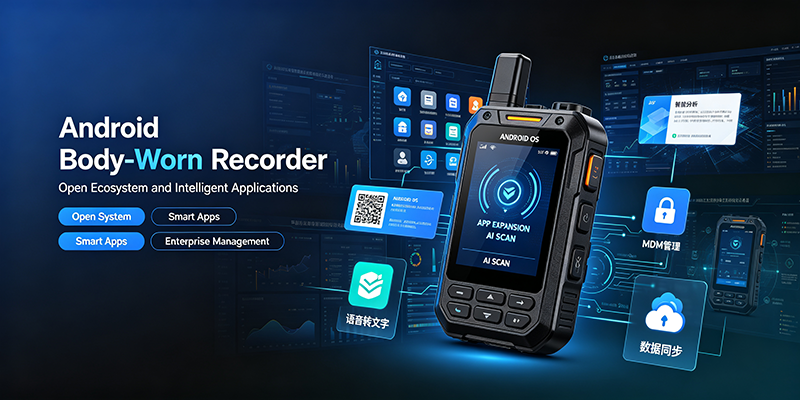
With the popularization of smart terminals, Android bodyworn recorders are transforming usage patterns of conventional recording devices by virtue of their open system ecosystem and powerful applicationexpansion capability. More than merely videorecording hardware, they run diverse business applications to realize multipurpose singledevice workflows. This article introduces purchasing essentials and operational benefits of Android bodyworn recorders.
1. Open Ecosystem: Boundless Application Expansion
The defining feature of Android bodyworn recorders is the builtin Android operating system, which supports installation of various applications. Users deploy businessprocessing, datacollection and QRcoderecognition apps according to operational needs, turning recording hardware into mobile work terminals. The open ecosystem enables seamless docking with existing business systems for realtime data upload and synchronization. Compared with closedsystem dedicated devices, Android bodyworn recorders deliver far greater flexibility and expandability.
2. Hardware Specifications: Foundation for Smooth Operation
The Android OS imposes certain hardware requirements. When selecting an Android bodyworn recorder, pay close attention to core configurations. An octacore or higher processor and minimum 3 GB RAM are recommended to avoid stuttering during multiapp concurrent operation. For storage, choose models with builtin memory of 32 GB or above and TFcard expansion support. A screen size around 3 inches strikes a good balance between clear appinterface display and wearable compactness.
3. Intelligent Functions: Improve Work Efficiency
Android bodyworn recorders enable numerous smart capabilities unavailable on traditional devices. QRcode scanning quickly reads documents and barcodes for automatic data entry; voicetotext converts onsite audio into written transcripts for convenient documentation; face recognition and licenseplate recognition support instant onsite information comparison. These intelligent features cut manual workload and boost frontline work efficiency and accuracy significantly.
4. Security & Management: EnterpriseGrade Deployment Assurance
As workoriented devices, Android bodyworn recorders require solid security and manageability. Prioritize models supporting MDM (Mobile Device Management), which allows administrators remote configuration, app pushing and function restriction to guarantee standardized device operation. Data encryption protects recorded videos and business data against information leakage. Certain products support dualsystem isolation to separate work and personal data for enhanced security.
Summary
With open ecosystem, intelligent applications and flexible expandability, Android bodyworn recorders bring innovative workflows for frontline assignments. They serve not only as recording gear but also as intelligent mobilework terminals. During procurement, evaluate hardware specs, smart features and securitymanagement capabilities, and select suitable models matching business requirements to make Android bodyworn recorders powerful efficiencyboosting tools.


