


How Do 4G Body‑Worn Recorders Improve On‑Site Operational Efficiency Practical Value of Real‑Time Backhaul and Remote Collaboration
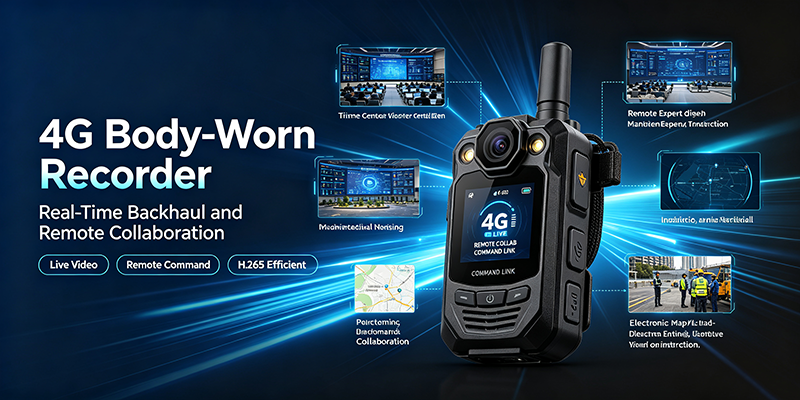
With full popularization of mobile internet, 4G bodyworn recorders are gradually replacing traditional offline recording devices and becoming new options for field operations. By enabling realtime video backhaul and remote command collaboration over 4G networks, such devices are profoundly reshaping onsite workflows across multiple industries. This article analyzes how 4G bodyworn recorders genuinely boost operational efficiency from technical features and practicalapplication perspectives.
1. RealTime Backhaul: Break Down Information Silos
The biggest painpoint of traditional recording devices lies in data lag: footage captured onsite can only be exported and reviewed after returning to offices, which often delays decisionmaking. Builtin 4G communication modules of 4G bodyworn recorders transmit live onsite feeds to command centers, allowing managers to obtain firsthand situational awareness without physical presence.
This function delivers outstanding value for emergencyincident response. When complex conditions emerge onsite, remote experts offer guidance via live video streams and greatly improve disposal accuracy and timeliness. Meanwhile realtime backhaul exerts supervisory effects and encourages field staff to operate in a standardized manner.
2. Remote Collaboration: MultiPerson & MultiTerminal Linkage
The value of 4G bodyworn recorders goes beyond oneway transmission and highlights twoway collaboration. Via supporting management platforms, command centers send voice commands, text messages and even electronicmap annotations to field devices to realize efficient fronttoback linkage. Multiple field personnel can start group calls through devices to raise teamcollaboration efficiency.
For largeevent security and crossregional joint inspections, multiple 4G bodyworn recorders access platforms simultaneously to build allround onsite monitoring networks. Commanders switch among different live feeds and allocate resources comprehensively to achieve genuine visualized command.
3. PracticalApplication Scenarios
Within urban administration, 4G bodyworn recorders support realtime violation reporting and remote evidence collection to greatly shorten caseprocessing cycles. For traffic patrols, accidentscene footage streams live to claimassessment centers, accelerating insurance evaluation and mitigating road congestion. In industrial safety inspections, remote experts guide field operators to troubleshoot equipment faults via live feeds and reduce productiondownturn losses.
4. Purchasing & Usage Suggestions
When selecting 4G bodyworn recorders, pay attention to network compatibility (fullnetcom preferred), video compression encoding (H.265 saves roughly 50 % traffic), and platformdocking capacity. During usage, reasonably configure backhaul bitrate to strike balance between image quality and data consumption. Equip highcapacity batteries or external power supplies to satisfy power demands for longduration realtime streaming.
Summary
With realtime backhaul and remotecollaboration capabilities, 4G bodyworn recorders redefine efficiency benchmarks for onsite operations. For industries requiring rapid response and multiparty cooperation, deploying such devices brings not merely technical upgrades, but comprehensive workflow innovation.


