


Can mobile phones use cellular networks to replace traditional walkie talkies
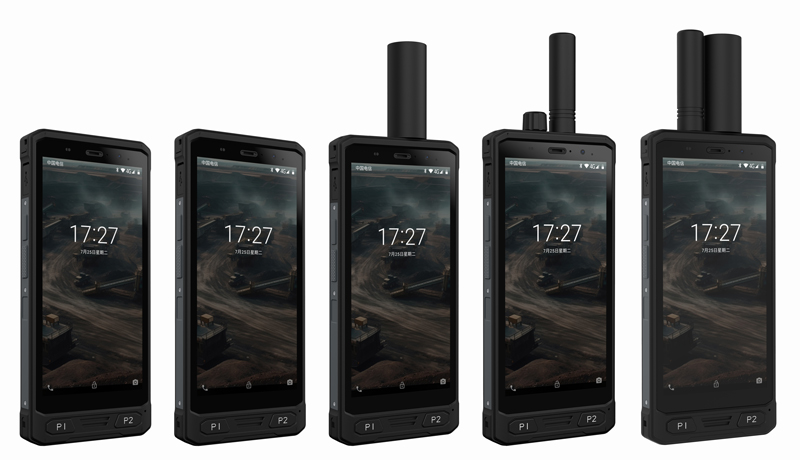
With the rapid development of mobile communication technology, mobile communication has become an essential tool in people's daily lives.
In daily work and life, walkie talkies also play an important role.
So, can mobile phones use software for public network intercom to replace traditional intercoms?
Let's discuss in detail.
Let's understand the basic principles of traditional walkie talkies and public network walkie talkie phones.
Traditional walkie talkies are devices that communicate through the use of radio signals at specific frequencies.
It is usually used for short distance wireless communication, such as rescue, natural disasters, mountainous areas, etc.
Public network intercom phones, on the other hand, use the phone's network (5G/4G/WiFi) connection for communication, and convert the phone's network signal into voice signal for intercom.
From the perspective of communication distance, public network intercom phones have a larger communication range compared to traditional intercoms.
The communication distance of traditional walkie talkies is usually several hundred meters to a few kilometers, while mobile public network walkie talkies can cover the entire network range and can be conducted wherever there is network signal.
This gives public network intercom a clear advantage in cross regional, cross city, and even cross country communication.
From the perspective of communication quality, traditional walkie talkies typically have better call quality in environments with stable radio signals.
Radio signals can avoid interruptions or unclear calls caused by network congestion or unstable signals.
However, public network intercom is limited by the impact of network quality, and factors such as network congestion and unstable signals may lead to a decrease in call quality.
Especially in some remote areas or areas with weak network signals, the call quality of mobile public network intercoms may not be as good as traditional intercoms.
From a functional perspective, public network intercom phones have more extended functions.
As a multifunctional device, mobile phones can achieve intercom functions by installing various intercom applications.
These applications typically have multiple functions such as voice chat, text chat, image and video transmission.
However, traditional walkie talkies can only achieve simple voice communication, and their functions are relatively single.
From the perspective of usage cost, public network walkie talkies have lower costs compared to traditional walkie talkies.
Traditional walkie talkies require the purchase of specialized equipment and payment of certain maintenance and management fees.
Public network intercom only requires the use of professional mobile phones, and the intercom function can be achieved by installing intercom applications.
This greatly reduces usage costs and facilitates user use.
In summary, public network intercom phones have advantages in communication range, function expansion, and cost, and can meet people's intercom needs in different scenarios.
However, in terms of call quality, traditional walkie talkies are still more stable and reliable.
Therefore, when choosing which intercom method to use, it is necessary to consider the specific situation comprehensively.
There is currently no clear answer to whether public network intercoms can completely replace traditional intercoms.
For some small communication ranges, traditional walkie talkies are still a more suitable choice.
For scenarios with high requirements for cross regional communication, stable mobile communication signals, or deployment of local area network coverage, functional expansion, and low cost, public network intercom phones are more suitable.
With the continuous development of communication technology in the future, public network walkie talkies are expected to further improve call quality and better meet people's needs.


