


The difference between public network intercom and mobile phone voice
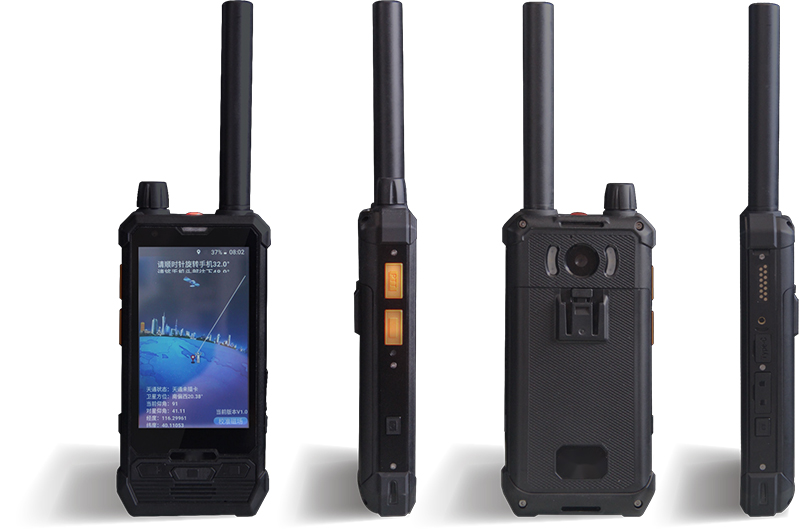
Due to its fast calling, one-to-many, one-to-one, and many-to-many communication characteristics, walkie talkies have become the preferred communication tool for self driving tours, large-scale events, transportation fleets, and major industrial and commercial enterprises.
To solve the problems of limited communication distance and complex frequency settings in traditional walkie talkies, 4G/5G public network intercom have emerged.
Some people may ask: Since the walkie talkie needs to use a 4G/5G network, why not use mobile phone voice directly?
In this issue, I will discuss with you which of the Public network intercoms and mobile voice is more efficient and rapid in communication in scenarios such as large-scale events, self driving tours, mountaineering, motorcades, industry, or other industries?
Sending a voice message or making a voice call using a mobile phone requires at least four steps: unlocking the phone, opening an application, selecting a contact or group, and sending a voice message.
These operations take more than 10 seconds.
Unlike this, the Public network intercom only needs to press and hold the shortcut call button to make a call, with a response time of only 1 second. Its professional audio processing chip and environmental noise reduction algorithm make the sound clearer.
Therefore, in terms of initiating dialogue and response efficiency, walkie talkies are more agile.
The main core point of walkie talkies is that they can efficiently conduct one-to-many calls.
Taking a large-scale event site as an example, as long as a command is sent through a public network intercom, all holders of the intercom can automatically hear the command content without the need for any other operations.
But when using mobile group chat voice to issue a command, others need to unlock their phone, open the app, and click on the voice content to know the command content.
If you don't check your phone in a timely manner, it's easy to miss important information.
Therefore, in situations where high-frequency one-to-many calls are required, such as large-scale events, industries, fleets, and nationwide and provincial-wide large-scale scheduling scenarios, public network walkie talkies that support 4G/5G national intercoms are a better choice.
The premise for our comparison is to compare in scenarios such as self driving tours, mountain climbing, motorcades, industries, and large-scale events, from the perspectives of one-to-many intercoms, quick replies, and quick command reception.
The public network walkie talkie supports the national 4G/5G network, with advantages such as fast teaming and one-on-one voice calls, making it more efficient than mobile voice communication.
However, in terms of privacy protection, historical message viewing, video calls, and more, mobile phones are more professional than walkie talkies.
Of course, when choosing communication tools, one must understand that walkie talkies and mobile phones have different application fields, so choosing the communication tool that suits oneself is the most efficient.


