


Body Worn Camera ROI - The Value of Every Recording
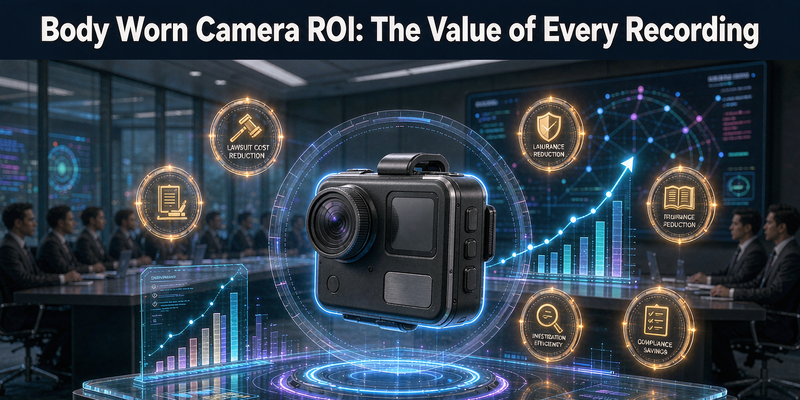
Body worn cameras cost money up front, and decision-makers rightly ask what comes back. The answer appears across the whole operation: fewer disputes, faster case resolution, lower insurance exposure, and staff who work with confidence. Measuring that value makes the investment case clear.
Where the Savings Show Up First
Complaints against staff drop sharply once cameras are visible, and each avoided complaint saves investigation hours and reputational damage. False claims collapse when footage exists, and genuine claims settle faster, cutting legal costs that quietly drain budgets year after year.
Operational Value Beyond Protection
Recorded work improves the work itself. Supervisors coach from real footage instead of anecdotes, training uses actual incidents rather than invented scenarios, and process reviews expose inefficiencies invisible in paperwork. Teams report not just fewer disputes but better daily performance.
Insurance and Liability Advantages
Documented operations lower exposure. Insurers increasingly recognize camera programs in liability pricing, and when incidents do occur, evidence that resolves them quickly prevents small events from becoming large settlements.
How to Measure Your Own Return
Track a simple baseline before deployment: complaints per month, average investigation time, claim costs, and incident frequency. Compare the same numbers after six and twelve months. Most organizations find the hard savings alone justify the hardware, with the softer gains as margin.
Every recording carries value: protection when accusations fly, proof when claims arrive, and lessons for the whole team. A body worn camera program is not a cost center; it is one of the most measurable investments a frontline operation can make.


