


Explosion Proof Rugged Tablet for Hazardous Zones
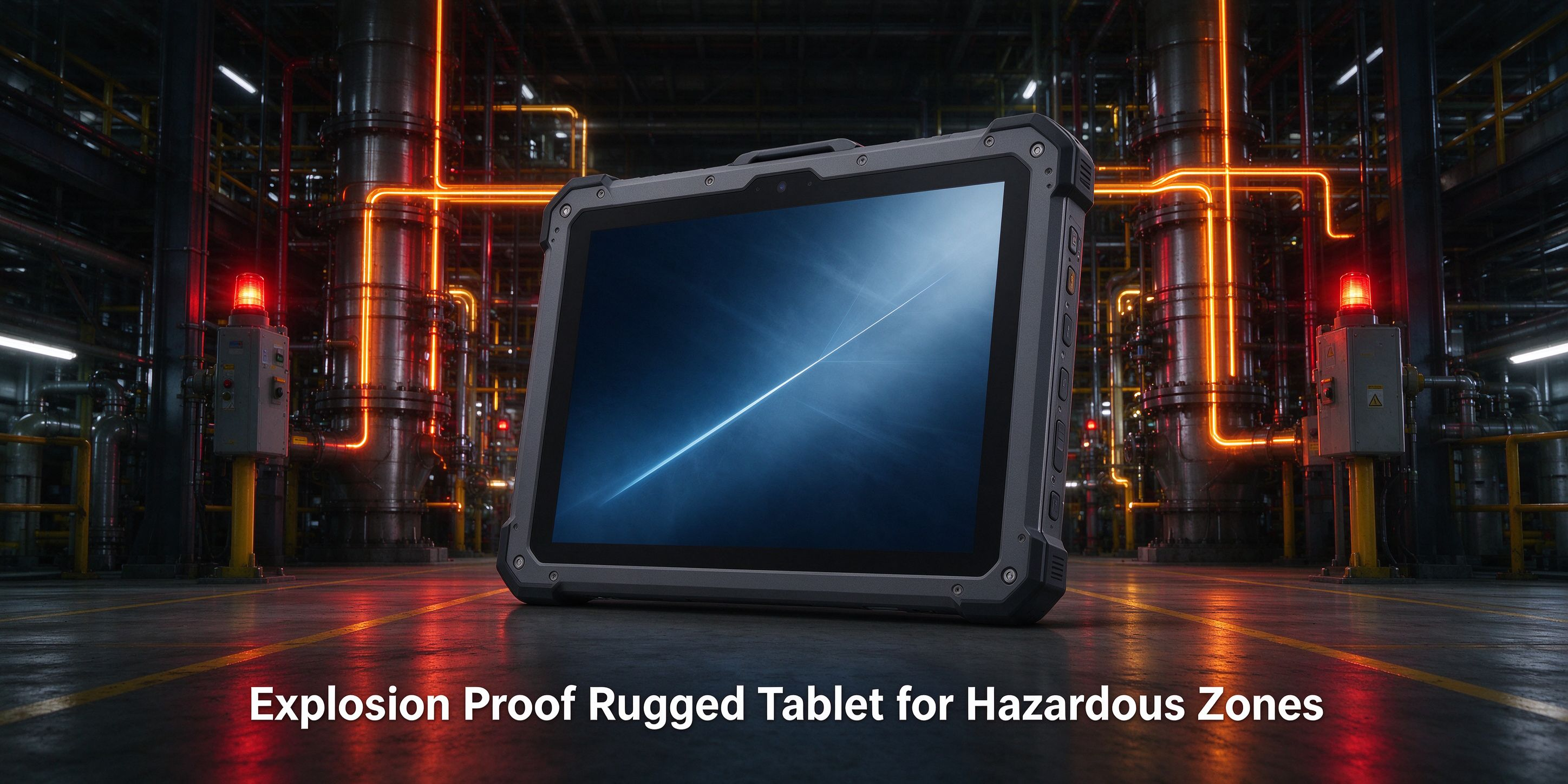
An explosion proof rugged tablet is engineered for classified areas where ignitable gases, vapors, or dust create continuous hazard. Refineries, chemical plants, grain silos, and oil rigs cannot use ordinary electronics that could become an ignition source. A certified explosion proof rugged tablet delivers computing power inside those zones without compromising safety.
Certification Is Non-Negotiable
Hazardous location use requires recognized intrinsic safety or flameproof certification for the specific zone and gas group. An explosion proof rugged tablet carries labels proving it will not release arcs, sparks, or surface heat that could ignite the surrounding atmosphere. Operators should verify the rating matches the actual area classification before deployment.
Design Principles Behind the Certification
Sealed enclosures, limited-energy circuits, and thermal management keep any internal failure contained. Screens, buttons, and connectors are designed so that even under fault conditions, energy stays below ignition thresholds. Battery packs are certified as part of the device, not replaced with generic third-party cells.
Daily Workflow in Hazardous Areas
Inside a plant, technicians use an explosion proof rugged tablet for safety checklists, permit-to-work forms, equipment calibration logs, and real-time telemetry. Photos of corrosion or leaks can be attached to reports without leaving the hazardous area. Wi-Fi and LTE keep data flowing to the control room for faster decisions.
Conclusion
In hazardous zones, a standard rugged tablet is not enough. An explosion proof rugged tablet offers certified safety plus field productivity, letting workers digitize inspections without introducing ignition risk. Safety-critical industries depend on this combination.


