


Industrial Tablet- Powering Smart Factories
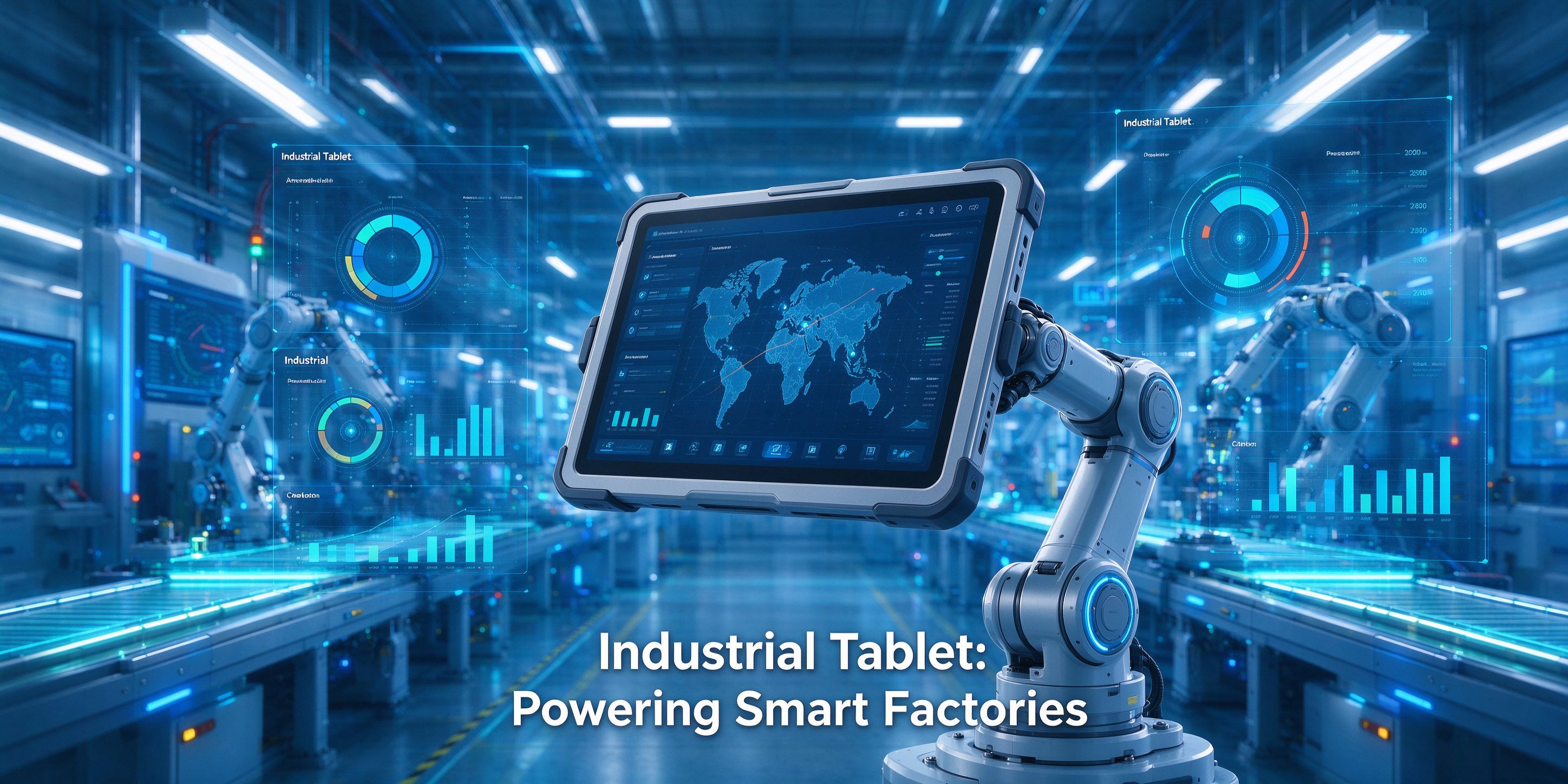
An industrial tablet is the interface layer of modern smart factories, connecting workers to machines, sensors, and production data in real time. Unlike consumer slates, an industrial tablet is built for 24/7 operation on the shop floor, with wide temperature tolerance, fanless cooling, and reliable mounting options. It turns isolated equipment into a connected workflow.
From Panel to Production Line
On a smart factory floor, an industrial tablet displays dashboards, runs HMI software, and lets operators adjust parameters without walking to a control room. Workers read work orders, log quality checks, and call maintenance from a single rugged screen. Mounted on arms or carts, it travels between stations as production lines shift.
Integration with Industrial Systems
Industrial tablets speak the language of factory automation: they support Wi-Fi, Ethernet, Bluetooth, and often serial or modular I/O. Drivers and protocols let them talk to PLCs, SCADA, MES, and IoT platforms. Camera and barcode modules turn the tablet into a scanning station for parts traceability and bin picking.
Designed for Continuous Operation
Fanless construction prevents dust intake and eliminates moving parts that fail. Wide voltage input and rail mounting fit factory power, while sealed bezels resist cleaning with industrial disinfectants. Long-term availability and stable image versions mean an industrial tablet can be deployed across a line and supported for years.
Conclusion
The industrial tablet is no longer a consumer device bolted to a cart. It is a purpose-built HMI that keeps smart factories flexible, connected, and running. For manufacturers investing in digital production, the industrial tablet is the on-floor window into real operations.


