


Configuration Guide for Individual Body‑Worn Recorders How Lightweight Hardware Meets Demanding Outdoor‑Operation Requirements
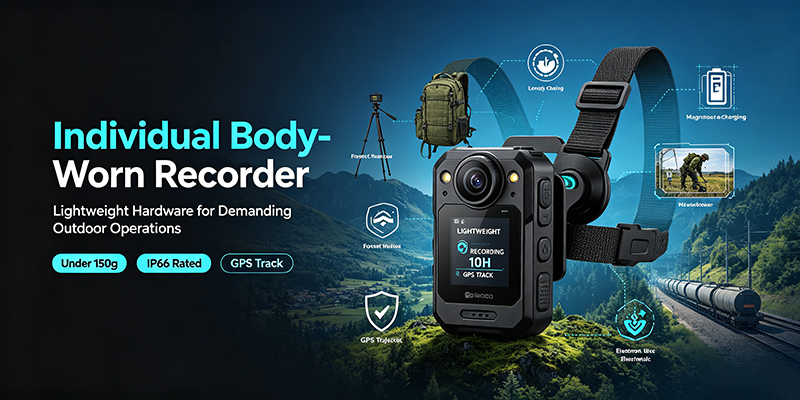
For personnel conducting longterm independent outdoor assignments, a wellsuited individual bodyworn recorder serves not merely as a recording gadget but as a reliable work companion. Outdoor environments are complex and volatile; devices must strike a balance between lightweight formfactor and solid performance. From configurationselection and practicalusage perspectives, this article delivers a practical configuration guide for solofield operators.
1. Importance of Lightweight Design
Solomission personnel wear equipment for extended periods; weight directly impacts wearing comfort and working status. Quality individual bodyworn recorders adopt highstrength engineeringplastic housings, with total weight kept below 150 g, bringing barely perceptible burden when chestmounted. Backclip design also matters; 360degree rotatable clips adapt to diverse wearing positions and angles.
Apart from mainunit weight, accessory lightweightoptimization also deserves consideration. Allinone hardware eliminates cumbersome extra connecting cables. Magnetic charging interfaces remove the hassle of frequent cable plugandunplug operations. These seemingly minor details greatly improve user experience during longduration outdoor missions.
2. Core Performance Specifications
Despite compact dimensions, performance shall not be compromised. For video recording, 1080P 30fps acts as baseline; certain models support 1080P 60fps for smoother footage of fastmoving scenes. Wideangle lenses above 120degree fieldofview are recommended to capture broad scenes even at short shooting distances.
Batterylife constitutes the lifeline for individualuse devices. Builtin batteries shall deliver over 10hour continuousrecording runtime, with 72hour standby preferred. For extralongshift tasks, pick fastchargingcapable models which provide hours of usage after just 30minute charging. For storage, 128 GB or larger TFcards are advised to accommodate prolonged recording.
3. OutdoorEnvironment Adaptability
Outdoor assignments expose hardware to harsh weather, making environmentalprotection capability essential. IP66 dustproof and waterproof rating copes with heavy rain and heavy dust; operatingtemperature range from 20 ℃ to 60 ℃ adapts to seasonal variations. Premium individual bodyworn recorders feature dropandshockresistant construction, functioning normally after freefall from 1.5 meters, wellsuited for mountainous and forested complex terrain.
Dualmode GPS / BeiDou positioning proves highly practical for outdoor work, logging travel trajectories in realtime and supplying location information in case of getting lost or emergencies. Some devices support electronicfencing, triggering automatic alerts when preset boundaries are crossed, enhancing safety management for field personnel.
4. Typical Application Scenarios
Forestrangers wear individual bodyworn recorders to document mountainpatrol procedures and spot fire hazards and illegal logging activities in a timely manner. During highaltitude powergrid inspections, equipment records full towercheck workflows for subsequent hazard analysis. Railway track inspectors on longdistance footpatrols benefit from lightweight hardware adding little extra burden while fully documenting line conditions. When environmentalprotection supervisors perform lawenforcement in remote zones, GPS trajectory logs and video recordings deliver dualsafeguard evidence collection.
Summary
When selecting an individual bodyworn recorder, the key lies in striking optimal tradeoffs among lightweight design, batterylife, environmentalprotection and functions according to actual operational surroundings and intensity. Properlyconfigured individualuse hardware will become a trustworthy allweather recording partner for outdooroperation staff.


