


Interpretation of Advantages of Public‑Network Two‑Way Radios New Communication Mode with Wide‑Area Coverage and Flexible Dispatching
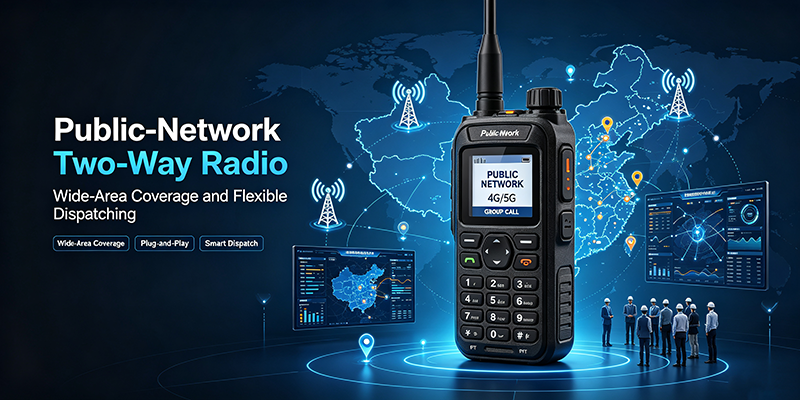
Traditional analog twoway radios suffer limited communication distance, while crossregional collaboration requires relay equipment with high deployment costs. Relying on public mobile communication networks, publicnetwork twoway radios deliver widearea coverage and plugandplay readiness, reshaping teamcommunication workflows. This article interprets its core strengths and applicable scenarios.
WideArea Coverage: Talk Wherever Signal Is Available
The standout merit of publicnetwork twoway radios lies in extensive coverage. They transmit voice over 4G/5G mobile networks and support pushtotalk regardless of distance within signalcovered zones. Stable connections are maintained from cities to villages and across provincial boundaries. For logistics transportation, crossregion construction, chain stores and other widerangeoperation scenarios, they offer irreplaceable advantages compared with conventional radios. As mobilenetwork infrastructure keeps improving, signal blind spots keep shrinking and communication reliability continues to rise.
ReadytoUse: No SelfBuilt Infrastructure Required
Traditional twoway radios demand frequency application, basestation and relayequipment erection, bringing heavy upfront investment and long construction cycles. Publicnetwork twoway radios require zero extra infrastructure. Simply insert a SIM card or activate eSIM, power on and you can start intercom. Such plugandplay capability is highly valuable for temporary projects, event support and mobile teams. Moderate hardware cost facilitates largescale rollout. No specialized maintenance personnel are needed, lowering operation and management expenses.
Intelligent Dispatching: Higher Efficiency via PlatformBased Management
Supporting dispatching management platforms deliver abundant management functions. Administrators view realtime locations of all personnel on electronic maps and oneclickcall nearby staff for incident response. Multiple call groups can be created to organize communication structures by department or project. Call monitoring and callrecording archives support postevent traceability and quality inspection. Text and picture messages can be distributed for information that is hard to express by voice. Some platforms interconnect with videosurveillance and business systems to build integrated commandanddispatch architectures.
Feature Evolution: From VoiceOnly to Multimedia Communication
Modern publicnetwork twoway radios have evolved from purevoice tools into multimedia communication terminals. Beyond basic pushtotalk, many models support realtime video backhaul for headquarters to observe livesite conditions. GPS / BeiDou positioning reports location data in realtime. Bluetooth connects headsets and shoulder microphones to free hands. WiFi and Bluetooth enable convenient file sharing. Highend variants run Android OS, supporting businessapp installation for QRcode scanning, photo capture and data collection, turning them into mobile work terminals.
Summary
Featuring widearea coverage, readytouse deployment, intelligent dispatching and multimedia functions, publicnetwork twoway radios bring brandnew solutions for team communication. With no privatenetwork construction requirement, controllable costs and simple administration, they fit scenarios involving largerange mobility and crossteam collaboration. Choosing publicnetwork twoway radios means adopting a more flexible, efficient and intelligent teamcommunication approach.


