


How Body‑Worn Recorders Boost Standardized Management of On‑Site Work
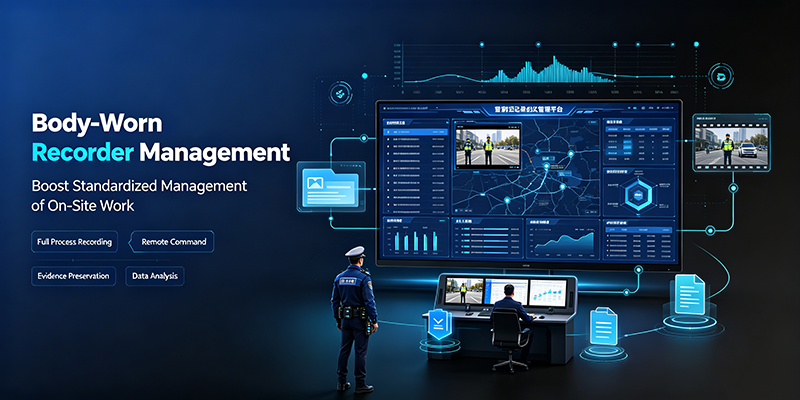
Within modern socialmanagement systems, bodyworn recorders have become indispensable smart equipment for field operations. This portable device integrating video shooting, photo capture and audio recording fully documents complete workflows and delivers solid data foundations for standardized administration. With deep advancement of digital transformation, application scenarios for bodyworn recorders keep expanding from basic onsite recording to remote command, evidence preservation, training review and other dimensions, and serve as an important driving force for workflow innovation.
Improve Work Transparency & Public Credibility
The core value of bodyworn recorders lies in fullprocess traceability. When staff wear the device on duty, every onsite handling procedure leaves retrievable audiovideo records and effectively avoids disputes arising from information asymmetry. Such transparent workflows protect legitimate rights of involved parties and provide solid performance guarantees for field personnel. In realworld applications, complete records quickly restore facts, supply objective references for followup processing and greatly enhance work credibility and authority.
Promote Standardization of Operating Procedures
Deploying bodyworn recorders establishes clear execution benchmarks for various workflows. Managers identify nonstandard behaviors by reviewing recorded footage and carry out timely correction and training. This continuousimprovement mechanism based on realworld data steadily lifts work quality. Meanwhile standardized operating procedures lower the learning threshold for newcomers. New employees rapidly master standard working methods and shorten training cycles by studying recorded highquality case videos.
Empower Remote Command & Collaboration
Integrated with 4G / 5G technologies, modern bodyworn recorders support realtime video streaming. Live onsite footage transmits synchronously to command centers, allowing commanders to grasp frontline situations remotely and make timely decisions and deployments. Under complex conditions, backend experts deliver professional guidance via live feeds and realize efficient fronttoback collaboration. This remotecommand mode greatly accelerates emergencyincident response and disposal and makes full use of professional resources.
Data Management & Intelligent Analysis
Matching management platforms enable effective utilization of massive datasets collected by bodyworn recorders. The system supports classified storage, fast retrieval and intelligent analysis of recorded materials and provides data support for administrative decisions. Through bigdata analysis, managers identify work patterns, discover weak links and optimize resource allocation, realizing the transition from experiencedriven management toward datadriven management. Such intelligent management maximizes value for every single record.
In conclusion, bodyworn recorders play an irreplaceable role in standardized management. They are documenters of field operations, promoters of standardized workflows and enablers of intelligent administration. In the digital era, giving full play to technical advantages of bodyworn recorders will push various workflows toward higher standardization, efficiency and transparency and contribute technological power to the modernization of social governance.


