


What Are the Advantages of 4G Badge Body Camera Lightweight Real-Time Video Transmission, Ideal for Frontline Operations
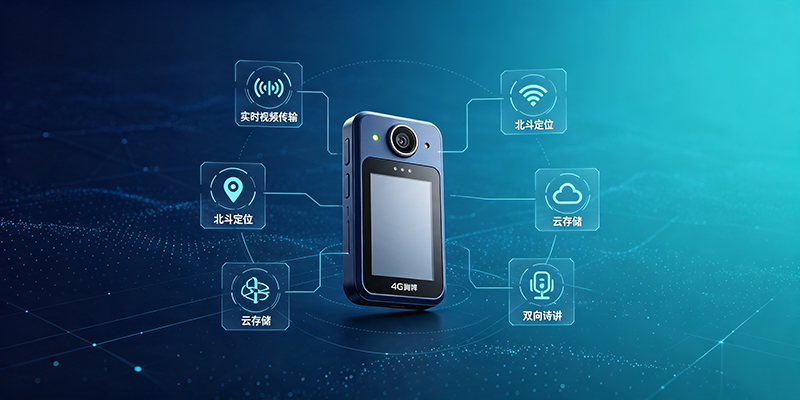
Traditional recording devices used by field staff and service personnel are usually bulky and only support local video recording, failing to meet the demands of remote dispatch. Featuring a badge-style lightweight design and 4G real-time video transmission, the 4G badge body camera balances wearing comfort and visual management, making it a preferred device for frontline operations across various industries.
1. Lightweight Badge Design for All-Day Comfort
Different from conventional body cameras, the 4G badge body camera adopts an integrated nameplate structure with a slim and compact body. It supports multiple installation methods including pin and magnetic attachment, which can be fixed neatly on work uniforms. Its low-profile appearance avoids creating tension with customers, making it suitable for government service halls, hospitals, banks, property services and other customer-facing scenarios.
The lightweight structure eases the burden for staff on long shifts. Simple one-touch controls allow users to start recording and live streaming quickly during emergencies. Many models support customized LOGO and staff information printing, realizing dual functions of identity display and on-site recording.
2. 4G Real-Time Streaming Enables Remote Visual Dispatch
Real-time video transmission stands out as the core strength of the 4G badge body camera. Supported by 4G full-network access and Wi-Fi dual-mode transmission, high-definition audio and video footage can be sent to the command platform with low latency. Managers can view first-person perspectives remotely and keep track of on-site situations without arriving at the scene.
When handling disputes, unexpected incidents or field abnormalities, the background can send remote instructions. Combined with two-way audio intercom, seamless coordination between the command center and frontline staff is achieved. Unlike ordinary cameras that only store footage locally, real-time streaming supports on-site response instead of post-event review, greatly improving emergency efficiency.
3. Rich Integrated Functions Standardize Field Management
Mainstream 4G badge body cameras integrate high-definition lenses, noise reduction audio recording, infrared night vision, Beidou positioning and cloud storage. Clear footage is captured in daytime, while night vision guarantees usable images for evening patrols. The positioning module records staff movement tracks and supports electronic fencing to supervise field inspection routes.
All recorded files are encrypted against unauthorized tampering. Complete audio and video evidence helps clarify liabilities during service disputes or safety incidents. The devices can connect to private management platforms for centralized access and administration of recordings and streaming data.
4. Widely Applicable to Diverse Frontline Scenarios
4G badge body cameras fit a wide range of use cases. They standardize services at government counters, enable all-round visual supervision for property security patrols, archive operation records for power and water field workers, document doctor-patient communication in medical institutions, and regulate on-site services for railway and shopping mall employees.
The wearable design suits long-duration outdoor work, while live streaming meets remote command requirements. One single device covers most on-site recording needs and cuts extra procurement costs for enterprises.
As the demand for on-site visual management keeps growing, the 4G badge body camera demonstrates remarkable competitiveness. Its lightweight construction reduces wear fatigue, and 4G real-time streaming builds a complete remote dispatch system. Equipped with reliable evidence collection and staff monitoring functions, it serves as a trusted optimal solution for standardized frontline operation management.


