


5G Body Worn Camera for Emergency Rescue Real‑time Transmission Empowers Command and Dispatch
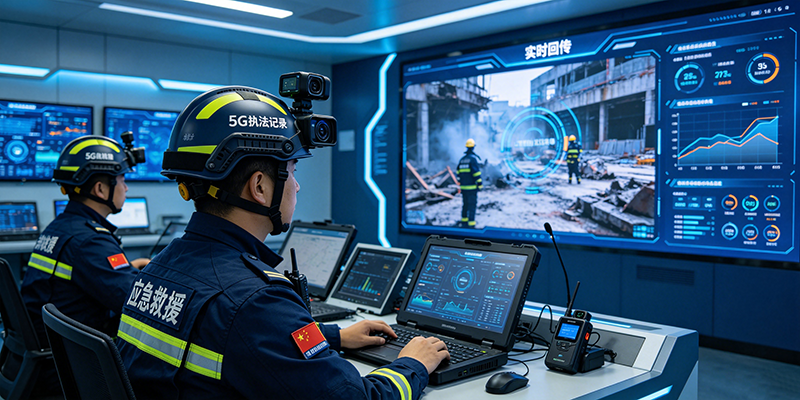
In sudden emergency scenarios such as fires, floods and geological disasters, complex and volatile onsite conditions and delayed information transmission directly affect rescue decisionmaking and personnel deployment efficiency. The 5G body worn camera dedicated to emergency rescue leverages the lowlatency and highbandwidth features of 5G networks. By transmitting realtime onsite audiovideo, positioning and other data, it connects information links between frontline rescue sites and rear command centers, effectively empowering command and dispatch under emergency situations and improving overall rescue response capacity.
1. Solving Pain Points of Information Transmission in Emergency Rescue
In traditional emergency rescue operations, rescuers can only briefly report site conditions via voice after entering disasterstricken areas. Critical details including site visuals, environmental hazards and the locations of trapped people cannot be fully delivered. Command centers are unable to intuitively grasp the overall situation, which may lead to biased scheduling and unreasonable allocation of rescue resources.
Tailored for such challenges, the 5G body worn camera for emergency rescue is built to withstand harsh outdoor environments with shockproof, waterproof and dustproof designs, providing stable hardware support for realtime data transmission.
2. Realtime Transmission Builds a Visualized Command System
Benefiting from highspeed and lowdelay 5G connectivity, the 5G body worn camera dedicated to emergency rescue synchronously transmits highdefinition videos, audios and Beidou positioning data to command platforms. Commanders can monitor live rescue footage in real time from the control center, tracking rescuers’ movement paths and identifying risk points in affected zones.
For multiteam coordinated rescue missions, data from multiple devices is aggregated simultaneously. Command centers can conduct overall planning, precisely allocate rescue forces, plan routes and issue remote operational instructions. Visualized and refined command and dispatch are realized to reduce decisionmaking errors caused by information gaps.
3. Supporting Postincident Review to Improve Emergency Systems
Beyond realtime scheduling functions, complete onsite data recorded by the 5G body worn camera for emergency rescue supports postrescue reviews. By reviewing footage and sorting out response procedures, deficiencies in rescue operations can be summarized. Emergency plans and scheduling strategies are optimized to continuously upgrade regional emergency rescue systems and accumulate experience for future similar incidents.
In conclusion, the 5G body worn camera dedicated to emergency rescue relies on realtime transmission technology to build an efficient communication bridge between onsite teams and command terminals. It comprehensively boosts emergency rescue efficiency through onsite information collection, realtime command and dispatch, and postincident optimization, serving as an essential device for smart emergency management construction.


